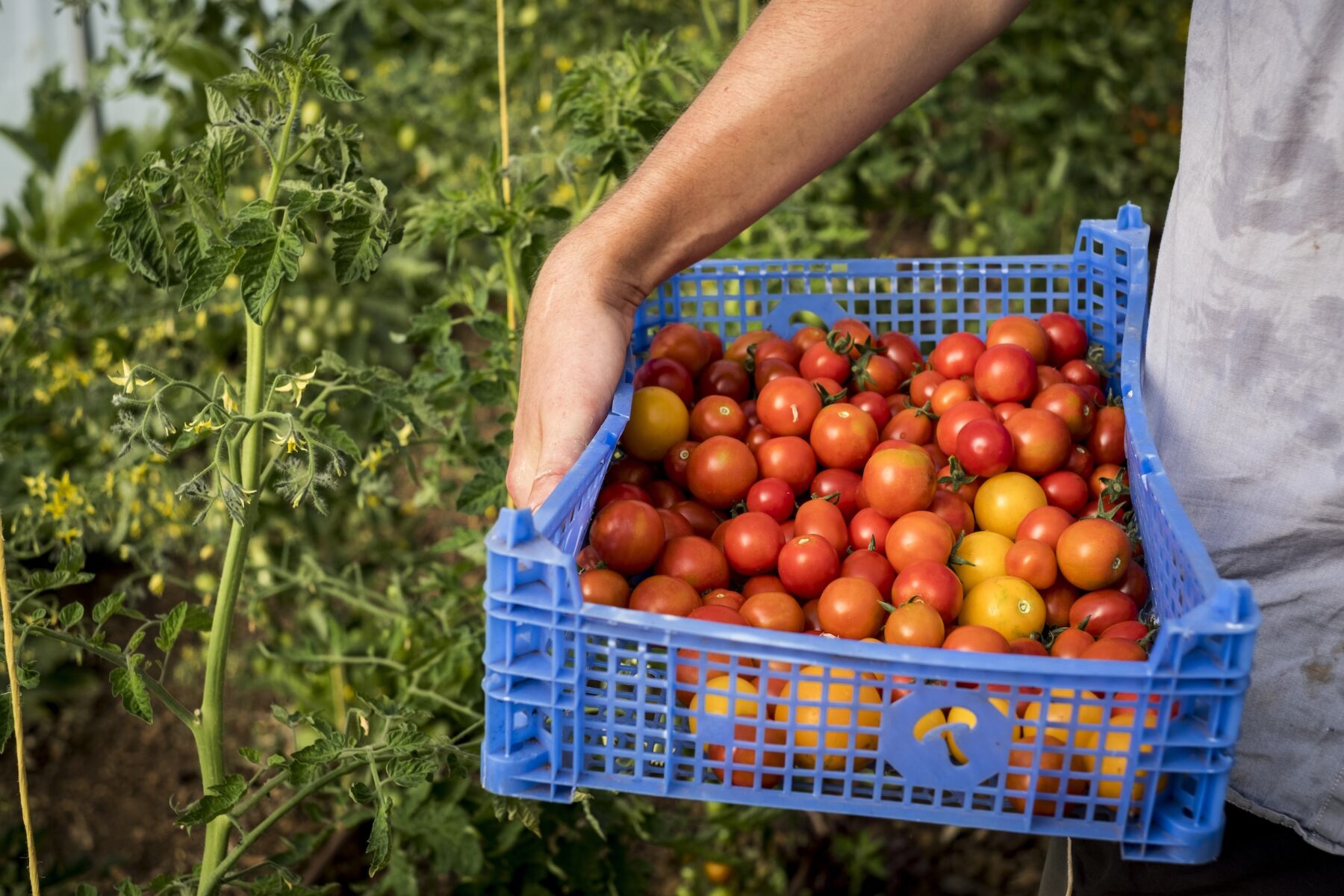
Implement
Private Institutions: Enter Purchasing Commitments
- Private Institution
- Self-Operated
Purchasing from a Traditional Distributor: Working with an Existing Distributor
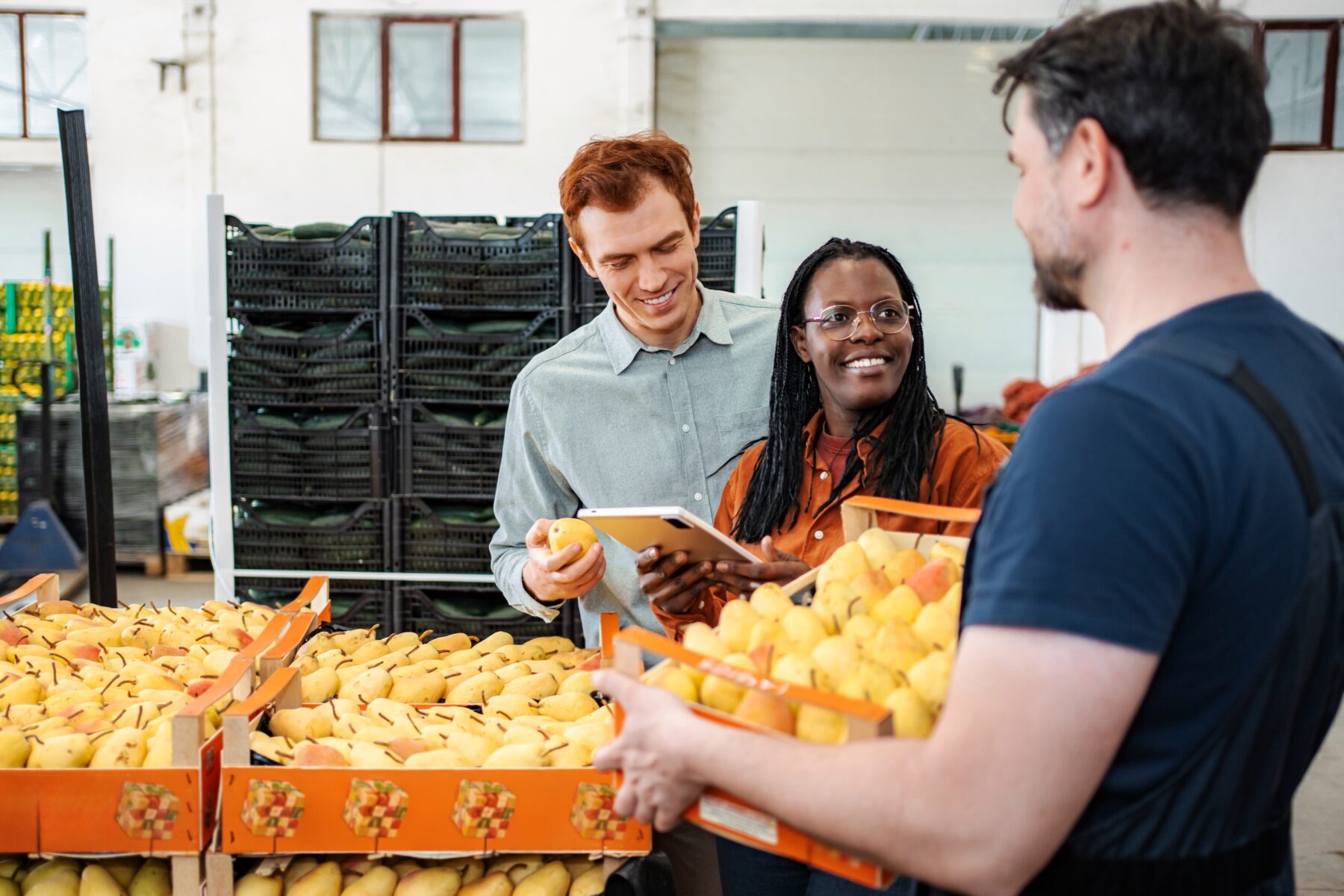
Even when an institution has an existing contract with a broadline distributor to source most of its food, it can work within that agreement to increase its values-based purchasing. The institution must be willing to think creatively and strategically about its existing agreements.
There are three main strategies:
- Leverage the buying guide
- Plan menus strategically
- Utilize off-contract purchasing options
Leverage the Buying Guide
An institution can develop “buying guides” to direct its distributors toward values-based vendors. Tailoring the buying guide to align with the institution’s purchasing guidelines can increase values-based purchasing. Some distributors maintain lists of “local/regional” or other specialty vendors—sometimes within their full catalog or in a separate “hotsheet.” For example, Royal Food Service in Atlanta, Georgia, publishes a “Local List” that features available local products and their farm.[6]
Depending on the distributor, institutions may request food from values-based vendors whenever possible or select preferred vendors and items from the catalog. If the distributor does not have many values-based vendor options, the institution should start a dialogue with the distributor about what it is looking for. As more institutions request these types of products, distributors may shift their buying practices to meet customer priorities.[7] As discussed above, requests for values-based products can be included in the institution’s solicitation when searching for a distributor, which will make the institution’s priorities clear from the start.
Plan Menus Strategically
Second, an institution can boost values-based purchasing through strategic menu planning. If local purchasing is one of an institution’s values, planning menus seasonally to feature in-season produce is a great way to ensure its distributor sources local produce. Menus that ignore seasonal availability—like requesting fresh berries in Georgia in January—force distributors to source from outside the region.
Some institutions have several dining facilities and therefore have very detailed menu plans. For institutions operating on such a large scale, a full menu overhaul may not be realistic. Instead, identifying 10–15 regularly used in-season items and directing the distributor to source them locally can be a manageable step.
Incorporating more plant-forward meals can also support values-based goals. Plant-based options are often less expensive than meat, freeing up budget for higher-cost local products.
Cycle menus, which repeat every 2-6 weeks, allow institutions to build consistency in their food service and ensure consistent quality. Similarly, seasonal menu cycles, which change the menu cycle offerings every few months, ensure that in-season produce is featured regularly.[8]
While this Toolkit does not provide a menu planning template, resources like The Chef Ann Foundation’s Lunch Box offer menu planning tools, sample menu plans, and nutrition analyses.[9]
Utilize Off-Contract Purchasing Options
Third, even when distributors give an institution full autonomy to select which of its approved vendors it sources food from, there are likely other values-based vendors not included on the distributor’s vendor list. Accordingly, there needs to be a way for the institution to supplement its food purchasing with direct purchases from values-based vendors. Ideally, the contract will include explicit non-exclusivity provisions that permit off-contract purchasing. An institution should pay attention to any exclusivity provisions in its distributor contracts to ensure it can source directly from other vendors if desired.
Footnotes
[6] Royal Food Service, The Local List, https://royalfoodservice.com/local-list/#.
[7] See A Toolkit for Institutional Purchases Sourcing Local Food From Distributors, Farm to Institution New England at 3, https://www.farmtoinstitution.org/sites/default/files/imce/uploads/1-Toolkit%20for%20Institutional%20Purchasers%20Seeking%20Local%20Produce%20thru%20a%20Distributor%202013.pdf.
[8] Christina Conell, Maggie Gosselin & Deborah Kane, Procuring Local Foods for Child Nutrition Programs, U.S. Department of Agriculture (2022), https://fns-prod.azureedge.us/sites/default/files/resource-files/June22F2SProcurementGuide508.pdf.
[9] The Lunch Box, Values Aligned Procurement, The Chef Ann Foundation, https://www.thelunchbox.org/procurement/values-aligned-procurement/ (scroll down to “Menu Planning and Forecasting Workbook”); The Lunch Box, Menu Cycles, https://www.thelunchbox.org/recipes-menus/menu-cycles/.